Buying a home is one of the most exciting milestones in life. While many buyers focus on saving for a down payment and qualifying for a mortgage, there are several additional expenses that can catch homeowners by surprise—especially in coastal North Carolina.
Whether you’re purchasing a home in Wilmington, Leland, Hampstead, Jacksonville, Surf City, Carolina Beach, or another Eastern North Carolina community, understanding the true cost of homeownership can help you budget confidently and avoid unexpected financial stress.
In this guide, we’ll break down the hidden costs of buying a home in Coastal North Carolina and explain what buyers should expect beyond their monthly mortgage payment.
How Much Does It Really Cost to Buy a Home in Coastal North Carolina?
Many buyers assume their largest expense will be the down payment. While that’s certainly important, there are several additional costs involved in both purchasing and owning a home.
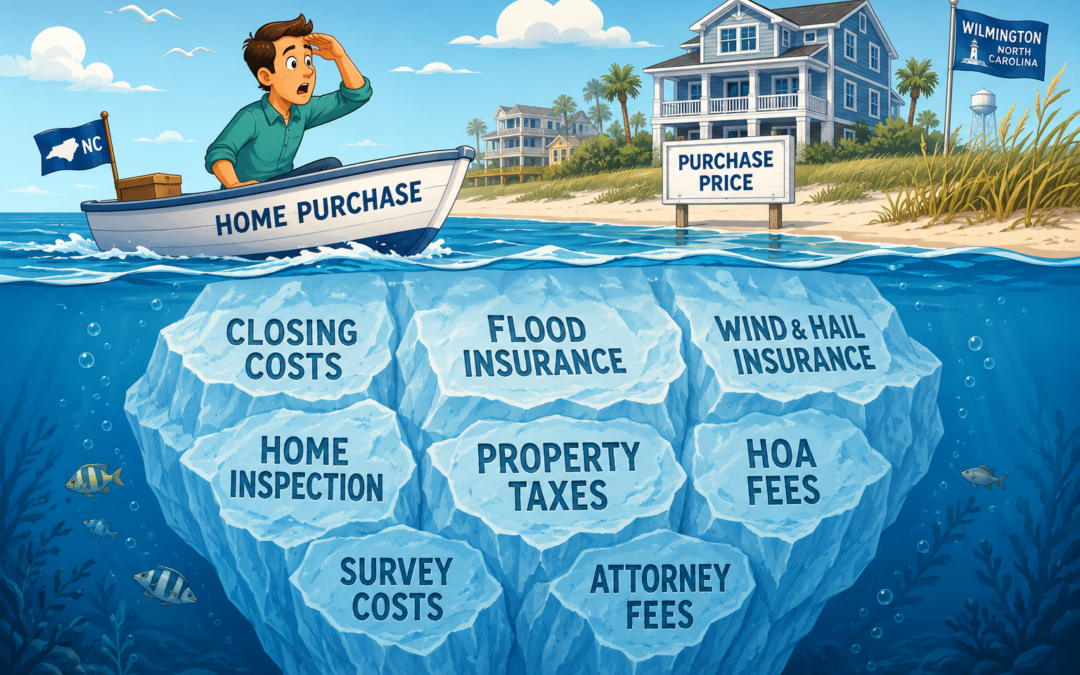
Some of the most common expenses include:
- Closing costs
- Home inspections
- Property taxes
- Homeowners insurance
- Flood insurance
- Wind and hail insurance
- HOA fees
- Maintenance and repairs
- Utility setup cost
Understanding these expenses before you buy can help you determine a realistic housing budget and avoid surprises after closing.
Understanding Closing Costs in North Carolina
One of the most frequently searched mortgage questions is: “How much are closing costs in North Carolina?”
Closing costs are the fees associated with finalizing your mortgage and transferring ownership of the property. In North Carolina, buyers can typically expect closing costs to range from approximately 3% to 5% of the home’s purchase price.
For example:
- $250,000 home: approximately $9,000 to $12,500
- $350,000 home: approximately $14,000 to $17,500
- $500,000 home: approximately $17,000 to $25,000
Closing costs may include:
- Lender fees
- Appraisal fees
- Credit report fees
- Attorney fees
- Title search fees
- Title insurance
- Recording fees
- Prepaid property taxes
- Prepaid homeowners insurance
- Escrow funding
Closing Costs vs. Prepaids: What’s the Difference?
When buying a home, you’ll encounter expenses beyond your down payment. These costs generally fall into two categories: closing costs and prepaids.
Closing costs are fees charged for services required to complete your mortgage and transfer ownership of the property. These may include lender fees, appraisal fees, title services, recording fees, and other transaction-related expenses. Closing costs are typically one-time charges paid at settlement.
Prepaids, on the other hand, are not fees—they’re upfront payments for future homeownership expenses. Lenders often collect prepaid items at closing to establish your escrow account and ensure certain bills are paid on time. Common prepaids include homeowners insurance premiums, property taxes, and prepaid mortgage interest.
In simple terms, closing costs pay for the transaction itself, while prepaids cover future expenses associated with owning the home. Both are usually due at closing, but they serve very different purposes.
The exact amount varies based on the loan program, purchase price, and individual transaction details
Home Inspections: A Small Cost That Can Save Thousands
Home inspections are one of the most valuable investments a buyer can make during the homebuying process.
A standard home inspection typically costs between $400 and $700, depending on the size and complexity of the property.
In Coastal North Carolina, buyers may also choose additional inspections such as:
- Termite inspections
- Moisture inspections
- Septic inspections
- Well water testing
- Roof inspections
- Structural evaluations
While it may be tempting to skip inspections in a competitive market, they can uncover issues that could cost thousands of dollars after closing.
Common coastal concerns include:
- Moisture intrusion
- Wood rot
- Foundation settlement
- Roof damage
- Termite activity
- HVAC corrosion from salt air exposure
Flood Insurance: An Important Consideration Along the Coast
Flood insurance is often one of the most overlooked costs of homeownership in Eastern North Carolina.
Many buyers assume that homeowners insurance covers flooding. Unfortunately, standard homeowners insurance policies generally do not cover flood damage.
Depending on the property’s location and flood zone designation, flood insurance may be required by your lender.
Even if it’s not required, many homeowners choose to carry flood insurance for added protection.
Flood insurance premiums vary based on:
- Flood zone
- Elevation
- Property value
- Construction type
- Coverage amount
Communities such as Wilmington, Carolina Beach, Kure Beach, Wrightsville Beach, Surf City, and Topsail Island often see increased interest in flood insurance due to their proximity to water.
Before making an offer, it’s wise to obtain an insurance quote so you understand the property’s total monthly ownership cost.
Wind and Hail Insurance in Coastal North Carolina
Another unique consideration for coastal buyers is wind and hail coverage.
Because Eastern North Carolina is vulnerable to tropical storms and hurricanes, insurance requirements may differ from inland areas.
Some homeowners may need:
- Separate wind and hail coverage
- Higher deductibles for hurricane damage
- Additional endorsements or policies
Insurance costs can vary significantly depending on:
- Distance from the coast
- Property age
- Roof condition
- Construction materials
- Claims history
This is why obtaining insurance estimates early in the homebuying process is critical.
Two homes with similar purchase prices may have dramatically different insurance costs based on location and risk factors.
Property Taxes in Coastal North Carolina
Property taxes are another important factor when calculating the true cost of homeownership.
Property tax rates vary by county and municipality.
For buyers considering homes in:
- New Hanover County
- Brunswick County
- Pender County
- Onslow County
- Craven County
Tax rates and assessments can differ considerably.
In addition, newly purchased homes may eventually be reassessed, potentially affecting future tax bills.
When evaluating a property, buyers should review:
- Current tax assessments
- Annual tax bills
- Municipal tax rates
- Special district taxes
A mortgage lender can help estimate monthly property tax obligations so there are no surprises after closing.
HOA Fees: What Buyers Need to Know
Many communities throughout Wilmington and surrounding areas have homeowners associations (HOAs).
HOA fees can range from less than $50 per month to several hundred dollars per month depending on the neighborhood and amenities.
HOA fees may cover:
- Community landscaping
- Pools
- Clubhouses
- Fitness centers
- Walking trails
- Security services
- Common area maintenance
While HOA communities often provide attractive amenities and neighborhood consistency, buyers should factor these costs into their monthly housing budget.
It’s also important to review HOA rules and regulations before purchasing.
Questions to ask include:
- What are the monthly dues?
- Are there upcoming special assessments?
- What amenities are included?
- Are there rental restrictions?
- Are there architectural guidelines?
Maintenance Costs for Coastal Homes
Living near the coast offers incredible benefits, but coastal environments can also accelerate wear and tear on homes.
Salt air, humidity, and storms can impact:
- Roofing materials
- Exterior paint
- HVAC systems
- Decking
- Windows
- Outdoor fixtures
Homeowners should budget annually for routine maintenance and repairs.
Common maintenance expenses include:
- Pressure washing
- HVAC servicing
- Roof inspections
- Gutter cleaning
- Exterior painting
- Landscaping
Many financial experts recommend setting aside 1% to 2% of a home’s value each year for maintenance expenses.
For a $400,000 home, that could mean budgeting approximately $4,000 to $8,000 annually.
Utility and Move-In Expenses
Many buyers overlook the smaller costs associated with moving into a new home.
These expenses can include:
- Utility deposits
- Internet installation
- Moving company fees
- New furniture
- Appliances
- Window treatments
- Lawn equipment
While these costs may seem minor individually, they can add up quickly during the first few months of ownership.
Creating a move-in budget can help buyers prepare financially and reduce stress during the transition.
How to Budget for the True Cost of Homeownership
Before purchasing a home, buyers should look beyond the mortgage payment and evaluate their total monthly housing expenses.
A complete homeownership budget should include:
- Principal and interest
- Property taxes
- Homeowners insurance
- Flood insurance
- Wind insurance
- HOA dues
- Maintenance reserves
- Utilities
Understanding these costs upfront can help buyers choose a home that fits comfortably within their financial goals.
Frequently Asked Questions:
Most buyers can expect closing costs to range from approximately 2% to 5% of the home’s purchase price.
Flood insurance may be required depending on the property’s flood zone and loan type. Even when not required, many homeowners choose to carry coverage.
Sometimes. If HOA dues are collected through escrow, they may be included. Many associations bill homeowners separately.
A common guideline is 1% to 2% of the home’s value annually for maintenance and repairs.
Depending on the property’s location, buyers may need homeowners insurance, flood insurance, and wind and hail coverage.
Final Thoughts
Buying a home in Coastal North Carolina is an exciting opportunity, but it’s important to understand the full financial picture before making a purchase.
By planning for closing costs, inspections, insurance requirements, property taxes, HOA fees, and ongoing maintenance, buyers can make informed decisions and enjoy homeownership with confidence.
If you’re considering buying a home in Wilmington, Leland, Hampstead, Jacksonville, Surf City, or anywhere in Eastern North Carolina, the team at Alpha Mortgage can help you understand your financing options and prepare for the true cost of homeownership.